
The EV industry is at an inflection point and batteries will play a critical role ahead -- batteries and related components typically constitute 35-45 per cent of an EV's costs.

'And a majority will be in the top-end vehicle range.'

'Instead of ACs, the government should do something to increase our salary.'

About half of the students, who have been affected by the war, have taken admission to universities in other countries.

With regulatory uncertainties clouding the future of online pharmacies, deals in the space are showing signs of slowdown, as also fresh investment from private-equity (PE) firms and venture capitalists (VCs). The data from Venture Intelligence shows so far in 2023 (as of June 13) there has been one deal with PE-VC funding. In 2022 there were four, a sharp fall from the 12, totalling $1,520 million, the sector had attracted in 2021.

Drug shortages in the US are at an all-time high, and price erosion has stabilised, which could benefit Indian pharmaceutical (pharma) companies with a US focus, according to analysts. Nuvama Research analysts said that US price erosion seems to have normalised to its old levels of 6-8 per cent and volumes are picking up with easing of inventory. Similarly, an ICICIdirect analyst noted: "Price erosion intensity has now moderated to a single digit and is expected to tone down a
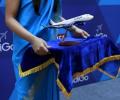
IndiGo has the flexibility to decide what would be the precise size of its aircraft fleet by 2035, its chief executive officer (CEO) Pieter Elbers said on Monday. IndiGo - the country's largest airline - has 312 aircraft in its fleet. Elbers said the airline will double in size by 2030, indicating the airline will have a fleet of about 625 by 2030.
Oral paracetamol and another cough medicine manufactured by companies based in Mumbai and Punjab were found to be "sub-standard or found to be containing toxins", reports Sohini Das.

Jimny will be priced between Rs 12.7 lakh and Rs 15.05 lakh.

The second cyber attack on AIIMS took place just last fortnight, but the hospital's cyber security systems were able to successfully thwart this attempt.
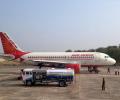
Air India has been a subject of its passengers' ire this week as more than half of its flights have been delayed, primarily because of an old crew rostering system. Due to the existing system, the airline has not been able to handle the disruption created by cyclone 'Biparjoy' on India's western coast. The sudden grounding of two planes also added to the carrier's woes.

Amid better semiconductor chip supplies, the Indian automotive industry posted an 8 percent growth in production of vehicles across categories for the month of May, with three-wheelers (20 per cent) and passenger vehicles (16 per cent) leading the pack. Exports, however, dipped 21 per cent at an industry level. The industry also recorded its highest-ever May wholesales of domestic passenger vehicles (334,802 units), riding on high demand for sport utility vehicles (SUVs) and better supplies of semiconductor chips.

Maruti Suzuki is set to launch a new multi-purpose vehicle (MPV) -- Invicto -- next month. It will be the company's first passenger vehicle with an ex-showroom price tag of Rs 20 lakh or more, said Shashank Srivastava, executive director (sales), on Tuesday. The upcoming MPV will compete with the likes of Toyota Innova Hycross, Kia Carnival, Hyundai Alcazar, MG Hector Plus, Tata Safari, Mahindra & Mahindra XUV700, and Mahindra & Mahindra Scorpio-N - all having three rows of seats. Invicto will be based on the Hycross by Toyota, which will manufacture Maruti's most expensive car at its Bidadi plant in Karnataka.
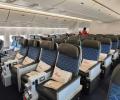
... changing seats and in-flight entertainment on its older aircraft.

The previous May peak was observed in 2018 when the domestic PV wholesales stood at 301,238 units.

Low-cost carrier IndiGo has asked American aerospace manufacturer Pratt & Whitney (PW) to quickly provide engines for the airline to press its grounded planes back into service, sources said on Wednesday. The airline wants to increase its domestic frequency to fill the supply-side void created after Go First's exit, they added. Go First stopped operating flights from May 3 after filing an insolvency application with the National Company Law Tribunal.

After reports of contamination in cough syrups sent from the country, India is considering a system to test them before exporting. It is learnt that the Central Drugs Standard Control Organisation (CDSCO) has sent a proposal to the Union health ministry on this. The idea is to test the medicines at government labs before exporting.

The semiconductor chip supply for the electric two-wheeler industry has normalised but the prices are up by nearly 50 per cent compared to pre-pandemic period, said Eric Vas, president, Urbanite, the electric vehicle (EV) business of Bajaj Auto. "It (the supply) has improved greatly. It has pretty much normalised. The problem is the cost. "The costs remain very high. Hopefully, the costs will start correcting themselves over this fiscal year," he said in an interview with Business Standard.
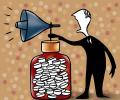
Drug sale volumes are almost stuck at pre-pandemic levels but price growth has improved value, data from market research agency Pharmarack AWACS showed. The Indian pharmaceutical market's (IPM) volumes in April 2023 grew by 0.21 per cent when compared to April 2019. Key therapy areas like cardiac, anti-diabetic and vitamins recorded negative volume or consumption growth, while respiratory, anti-infectives, and pain and analgesics had positive growth from April 2019 to April this year.

Akasa Air's plane occupancy, or load factor, improved the most among all major carriers in April compared to the last month. Load factor signifies the percentage of seats that the airline has been able to fill in its planes. The Vinay Dube-led carrier, which started commercial flights in August last year, saw its load factor jump by more than 11 per cent in April, according to the Ministry of Civil Aviation's data
